Dog Walking Business Cards (Ideas, Examples & What Works)
April 14, 2026 • Updated 5 months, 3 weeks ago
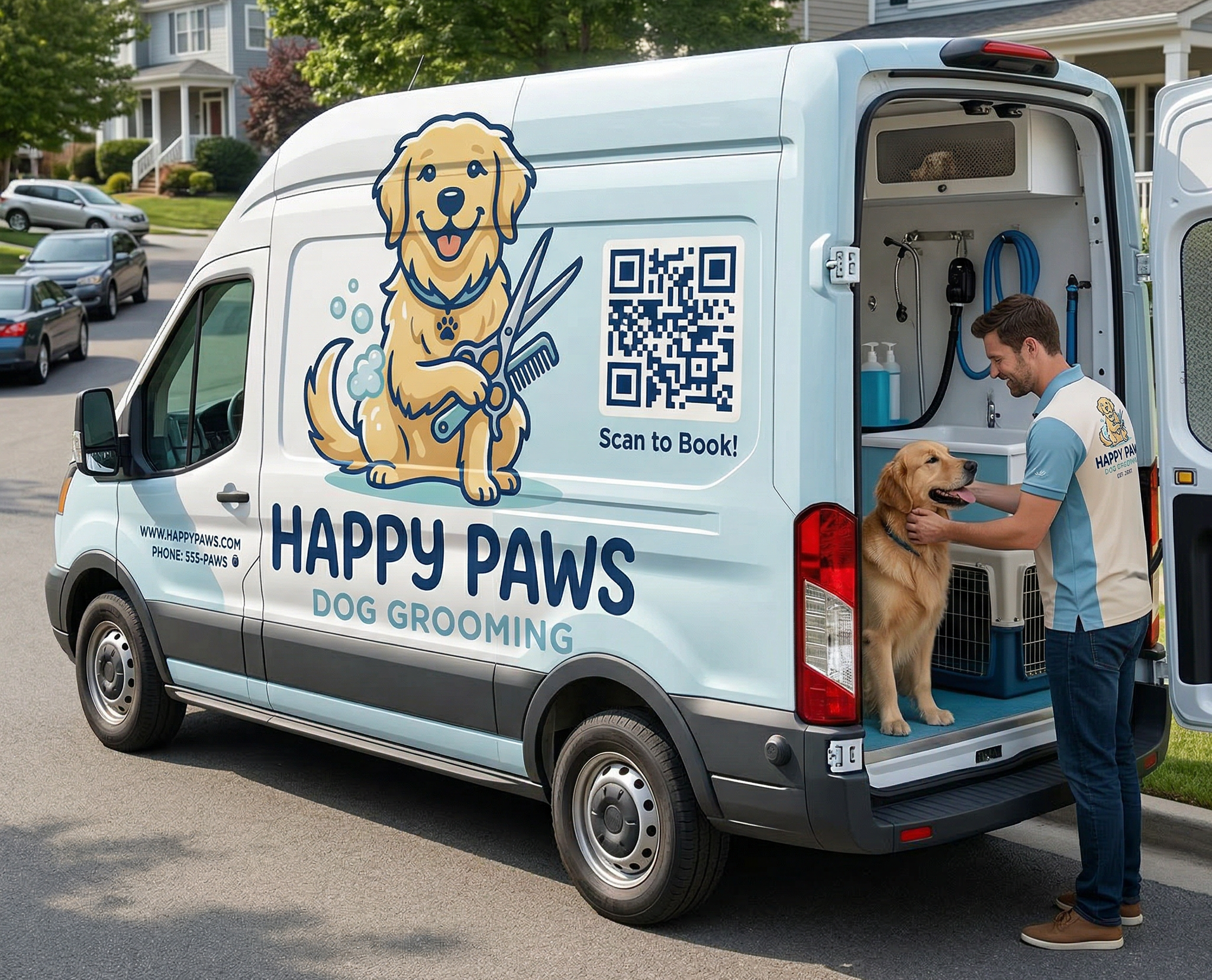
Dog walking is a referral business. One happy client tells their neighbor, their coworker, their dog park friend — and suddenly you've got a new booking. But that only works if the person recommending you can actually share your contact info. And that's where most dog walking business cards fall short.
Here's what to put on a dog walking business card, what most dog walkers get wrong, and a smarter approach that makes sure your number doesn't end up lost in someone's coat pocket.
What to Include on a Dog Walking Business Card
A dog walking business card needs to answer three questions in about five seconds: who are you, what do you do, and how do I reach you. Everything else is optional.
Your name and business name. If you operate as "Happy Trails Dog Walking," use that. If you're just using your own name, add "Dog Walker" or "Professional Dog Walking" underneath so there's no confusion about what you do.
Your phone number. This is the single most important thing on your card. Make it the largest text element. Dog owners who need a walker want to call or text — don't make them hunt for the number.
Your service area. Dog walking is hyper-local. If you work specific neighborhoods or a radius around a zip code, say so. "Dog walking in Lakewood, CO" is more useful than no location at all. It also helps with referrals — the person recommending you can say "she walks dogs in our area" with confidence.
Your services. Don't assume everyone knows what you offer beyond basic walks. List it out: solo walks, group walks, puppy visits, midday check-ins, weekend availability. A quick list helps dog owners self-qualify before they even call you.
A photo of you with dogs. Dog owners are trusting you with their pet and a key to their home. A photo of you with a happy dog on a leash builds more trust than any logo or tagline. Real photos beat stock images every time.
Common Mistakes on Dog Walking Business Cards
Most dog walking business cards look fine but fail at the one job they're supposed to do: get the dog owner to contact you later.
Too much information. Your business card is not a brochure. If you're listing your rates, your schedule, your certifications, your insurance info, and your social media handles all on a 3.5x2 inch card, none of it is readable. Pick the essentials: name, number, services, area. That's it.
No photo. A card with just text and a paw print clip art looks generic. There are dozens of dog walkers in most neighborhoods. A photo of you with an actual dog makes your card the one they remember.
Tiny phone number. If someone has to squint to read your number, they won't call. Your phone number should be the easiest thing to find on the card.
No clear service description. "Pet Services" is vague. "Daily dog walks — solo and group — in North Dallas" tells the dog owner exactly what you do and where.
Why Paper Dog Walking Business Cards Get Lost
Here's the real problem: even a perfectly designed dog walking business card usually ends up lost.
You meet someone at the dog park. They ask what you do, you hand them a card. They put it in their pocket. By the time they get home, it's on the counter. By Wednesday, it's in a drawer. By the time they actually need a dog walker — maybe weeks later when a work trip comes up — they can't find it. They Google "dog walker near me" and book whoever shows up first.
You did everything right. You made the connection, you had the card ready, you handed it over. But the format failed you. Paper is temporary. Phone contacts are permanent.
A Better Business Card for Dog Walkers
A digital business card solves the problem paper can't: it gets your contact saved to the dog owner's phone on the spot.
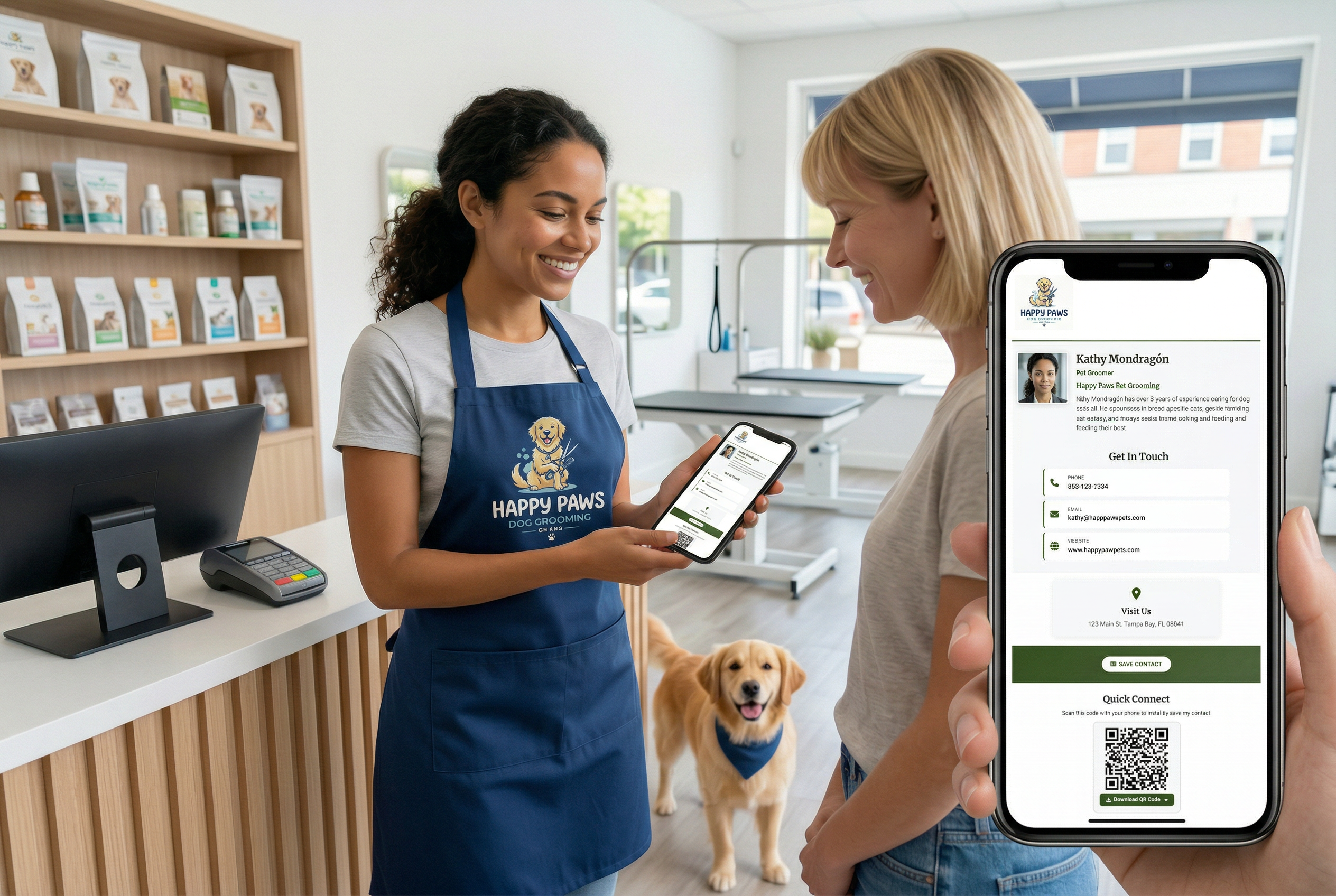
Instead of handing over a card they'll lose, you show them a QR code. They scan it with their phone camera and land on a clean page with your name, photo, services, phone number, service area, and a "Save Contact" button. One tap and your info downloads directly into their phone contacts. Your name, your number, your business — saved permanently.
Now when their coworker mentions needing a dog walker, they don't have to dig through a drawer. They pull up your contact on their phone and text it over. The referral actually happens.
You can print the QR code anywhere — on a paper business card, a flyer at the vet's office, a magnet on your car, a sign at the dog park bulletin board. Every scan goes to your live page. When you add a new service or change your number, the page updates and every QR code you've ever printed still works.
If you want to see what this looks like, check out the digital business card built for dog walkers and pet services — it's designed for exactly this use case.
Use Both Together
You don't have to ditch paper entirely. Plenty of dog walkers print their QR code on a paper business card. You still have something physical to hand over at the dog park or leave at a pet store. But the QR code on the card means the dog owner saves your contact to their phone before that card gets lost. The paper makes the introduction. The QR code makes it stick.