Pet Business Cards (Ideas, Examples & What Actually Works)
April 14, 2026 • Updated 5 months, 4 weeks ago
Whether you're a pet groomer, a dog walker, a pet sitter, or running any other pet care business, your business card is doing one of two things: getting you repeat clients and referrals, or getting thrown in a drawer and forgotten. Most pet business cards end up doing the second one.
Here's what actually belongs on a pet business card, what works for different types of pet services, and a smarter option that makes sure your contact info stays in the client's phone instead of disappearing after the first appointment.
What Every Pet Business Card Needs
No matter what kind of pet business you run, the fundamentals are the same. Your card needs to answer three questions instantly: who are you, what do you do, and how does someone reach you.
Your name and business name. Both matter. The business name tells people what you do. Your first name tells them who they're trusting with their pet. "Tail Waggers — Jessica" is warmer and more memorable than just a business name alone.
A phone number that's easy to find. This is the most important thing on your card. Not your logo, not your tagline — your phone number. Make it the largest text on the card. If someone has to hunt for it, they won't call.
Your services, spelled out. "Pet Services" is vague. "Dog grooming, cat grooming, nail trims, bath & brush" is specific. A clear list helps pet owners immediately know if you offer what they need, and it might remind them of a service they didn't think to ask about.
Your location or service area. Pet care is local. Whether you have a salon, a facility, or a mobile service, tell people where you operate. "Serving Fort Worth & Arlington" or "Located at 123 Main St, Suite B" saves the client a phone call to find out if you're nearby.
A photo. Pet owners are trusting you with their animals — sometimes with keys to their home. A real photo of you with a pet builds more trust than any clip art paw print. It also makes your card stand out from the pile of generic cards on the vet's bulletin board.
Business Cards for Different Pet Services
While the basics are the same, different pet businesses benefit from emphasizing different things on their cards.
Pet groomers should highlight their service menu and hours. Grooming is a repeat service — clients come back every 4 to 8 weeks. Your card needs to make rebooking easy. A before-and-after photo of a grooming job is the most persuasive thing you can put on a card. For more grooming-specific tips, see pet grooming business cards.
Dog walkers should emphasize their service area and availability. Dog walking is hyper-local — your client needs to know you cover their neighborhood. Listing whether you do solo walks, group walks, or midday check-ins helps clients self-qualify before they call. More on this at dog walking business cards.
Pet sitters should focus on trust-building. You're staying in someone's home with their pets. A photo of you with animals, a brief mention of your experience, and your services (overnight, drop-ins, medication admin) all help a pet owner feel comfortable hiring you. See pet sitting business card ideas for more detail.
Mobile pet services — mobile groomers, mobile vets, poop scoop services — should always include their service radius. Since you go to the client, they need to know you reach their area. A QR code on your vehicle is also a natural fit since you're parked in neighborhoods every day.
Why Most Pet Business Cards Don't Work
The problem with pet business cards isn't the design. It's the format.
You hand a card to a pet owner after an appointment or at a dog park. They put it in their pocket, their wallet, their purse. Within a week, it's on a kitchen counter. Within a month, it's in a junk drawer or gone entirely. When they need you again — or when someone asks them for a pet care recommendation — they can't find your number.
This happens to every pet business, not just yours. The pet owner liked your service. They wanted to call you back. They wanted to refer you. But your contact info existed on a piece of paper that disappeared, and the moment passed.
The issue is simple: people don't store contacts on paper anymore. They store them on their phone. If your number isn't saved to their phone, it's temporary.
A Better Option for Pet Businesses
A digital business card gets your contact info into the pet owner's phone permanently — not on a piece of paper temporarily.
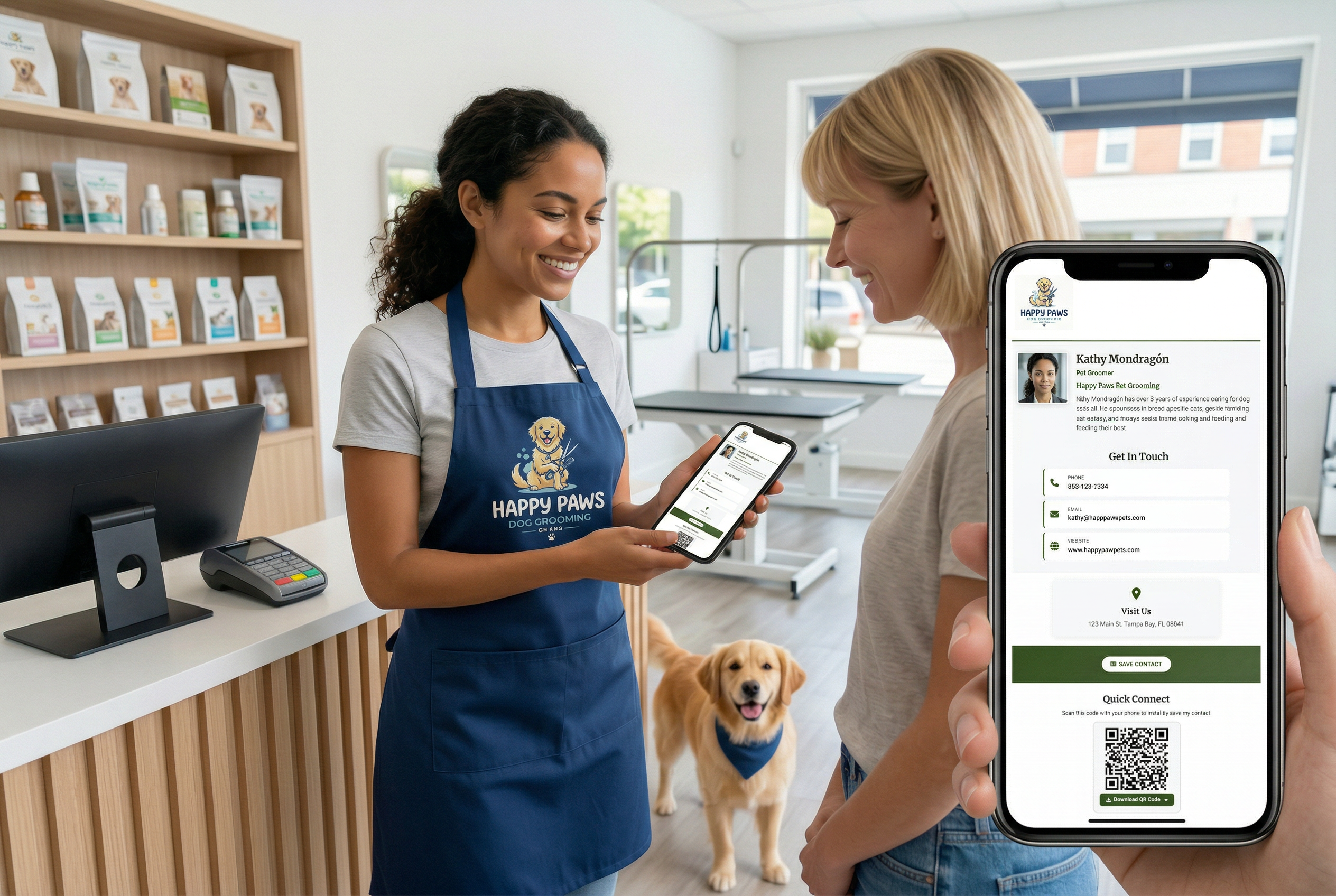
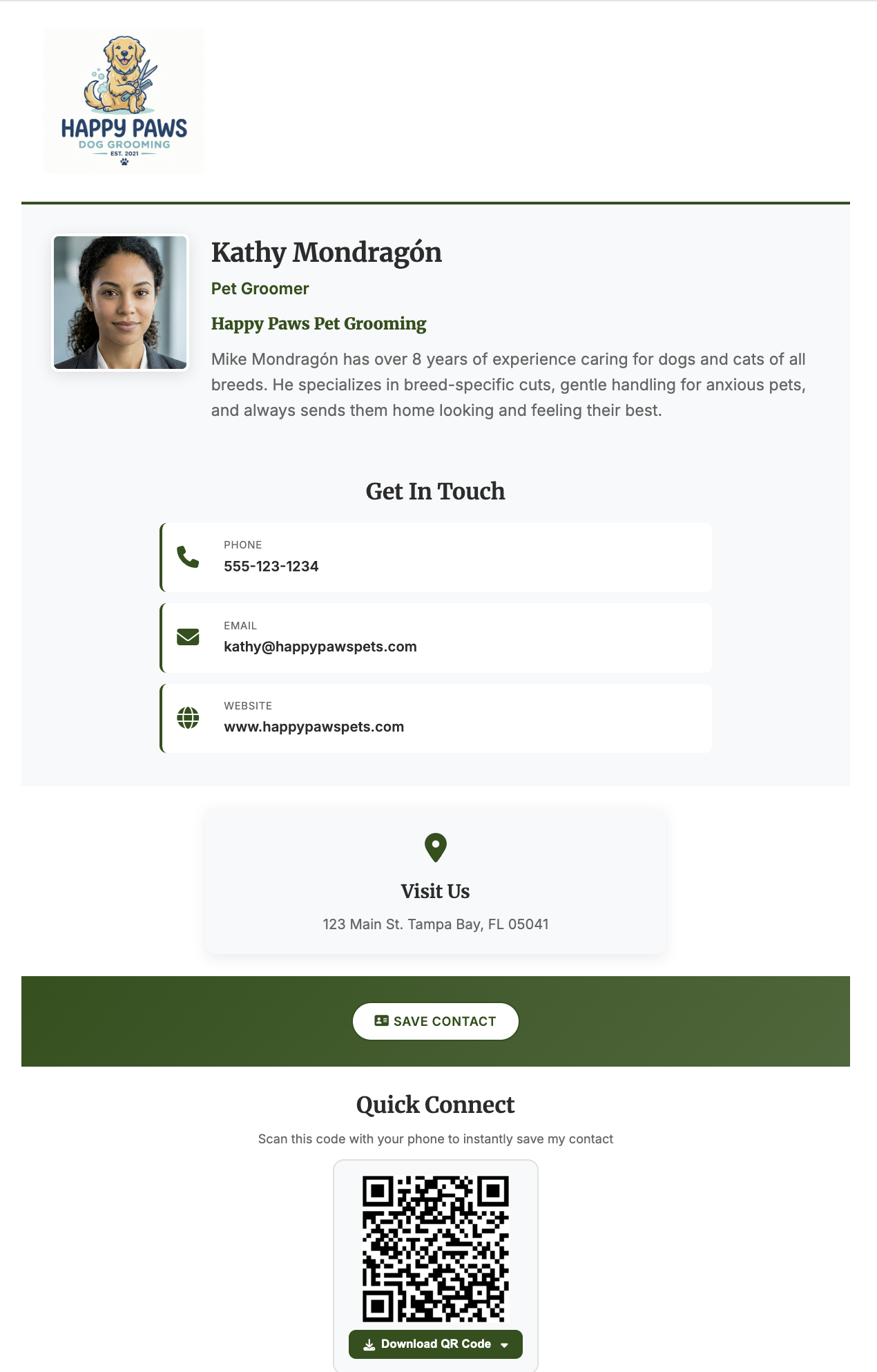
Here's how it works: instead of (or in addition to) handing out a paper card, you share a QR code. The client scans it with their phone camera and lands on a clean page with your name, photo, services, phone number, and a "Save Contact" button. One tap and your full contact info downloads directly into their phone. Done.
Now when they need to rebook six weeks later, they search your name in their contacts and call. When their neighbor asks "who grooms your dog?" they pull up your contact and text it over in two seconds. The referral actually happens.
You can put the QR code anywhere — on a paper business card, a counter sign at your salon, a sticker on your van, a flyer at the vet. Every scan goes to your live page. When you add a service, change your hours, or get a new phone number, you update the page once and every QR code you've ever shared still works.
If you want to see what this looks like, check out the digital business card for pet services — it's built specifically for groomers, dog walkers, pet sitters, and every other pet care business.
Paper and Digital Together
Most pet businesses don't need to choose between paper and digital. The smartest approach is to print your QR code on your paper business card. The paper card still works as a physical handoff — something to give a client after an appointment or leave on a bulletin board. But the QR code on it ensures the client saves your contact to their phone before that card gets lost.
That way you get the best of both: a professional first impression and a contact that sticks.